We provide project and construction management, commercial and cost management, and contracts and claims services — across the full lifecycle, from strategic definition to handover.
Where the Contractor has established its entitlement to additional payment for a delay attributable to the Employer, the Contractor is to demonstrate, and the Engineer is to agree or determine, the additional payment the Contractor isentitled under the Contract for the prolongation of the Project.
The 2nd Edition of the Society of Construction Law Delay and Disruption Protocol (the “SCL Protocol”), refers to prolongation as, “the extended duration of the works during which time-related costs are incurred as a result of delay.”
Basis of compensation forprolongation
The primary purpose of a claim for prolongation, which aligns with the general principles of the standard forms of contract, and the SCL Protocol, is toput the Contractor back into the same financial position it would have been, if the cause of delay attributableto the Employer had not occurred.
Unless the Contract expressly provides otherwise, the additional payment to be made to the Contractor for prolongation, is to be for the actual costs it has incurred because of a delay attributable to the Employer, and tender allowances have limited relevance in the evaluation and determination of an additional payment for prolongation.
Types of costs claimable
As costs of prolongation are attributable to delay these types of cost are incurred as a function of time. These are Project “running costs” or “re-occurring costs”, and can be classified as “time-related costs”
Costs of prolongation do not include “one-off” or “task related” costs, such as mobilisation and demobilisation, along with, erection and dismantling of scaffolding and temporary works (unless they become re-occurring “one-off” or“task-related” costs caused by a specific cause of delay) and costs incurred based on the volume of work that is being produced (i.e. labour, task-specific equipment and materials directly producing the Works).
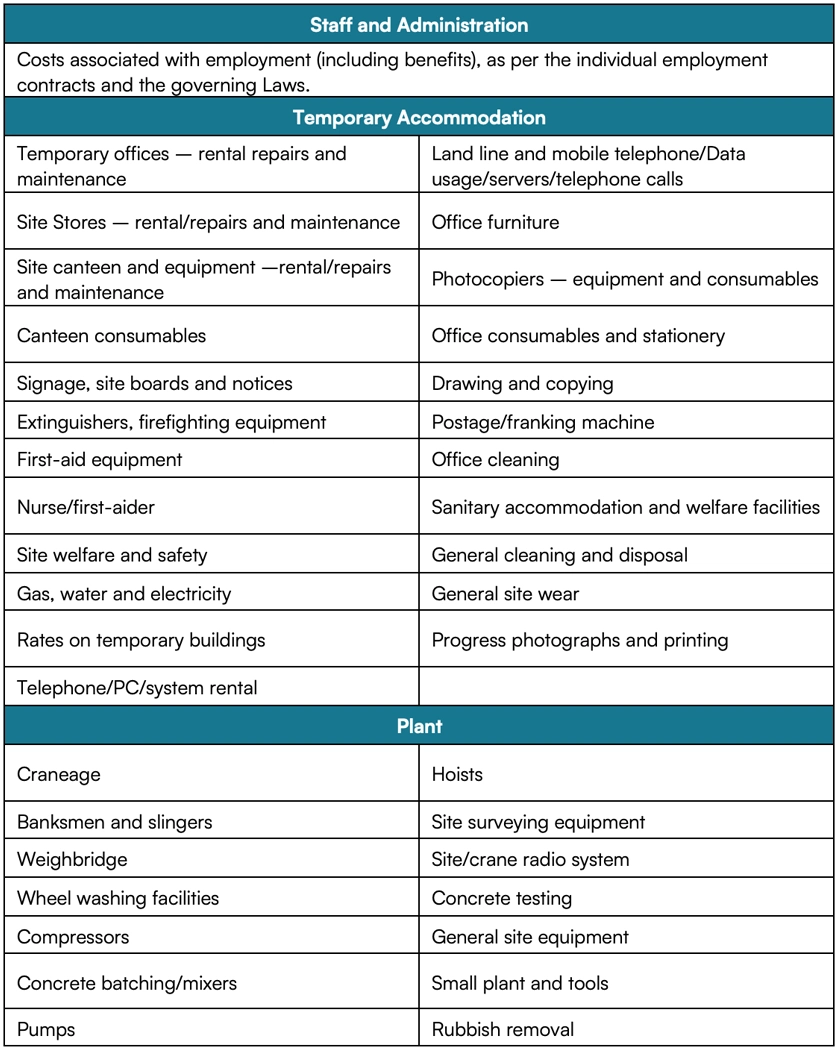
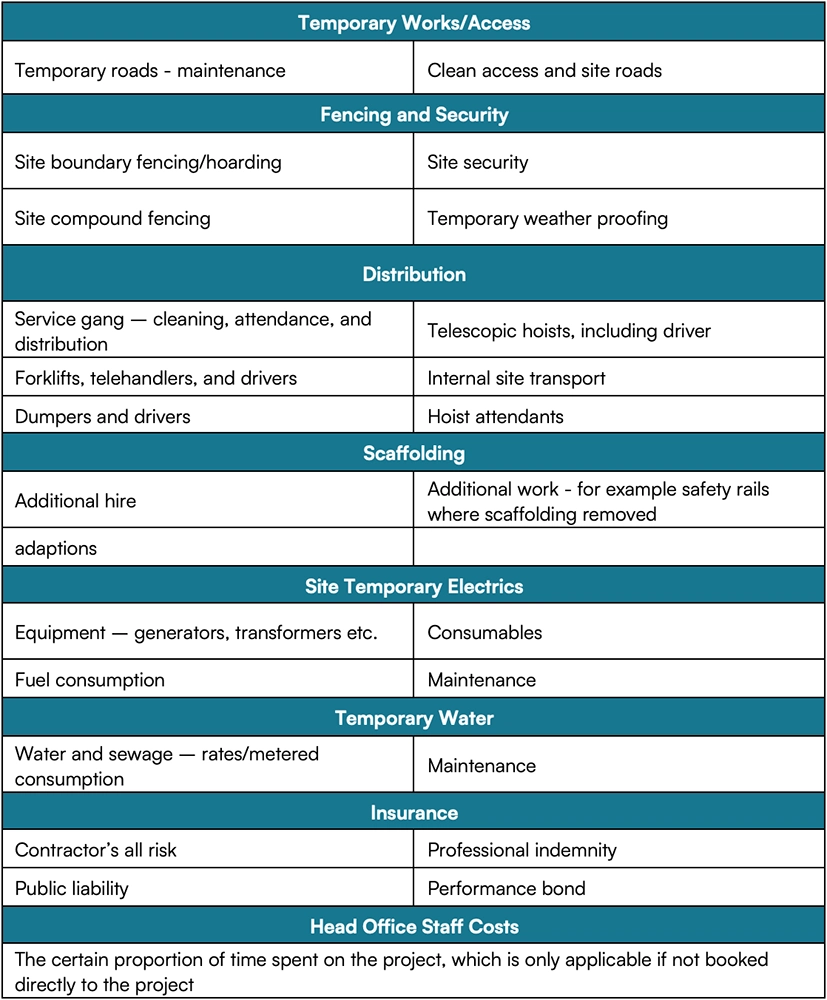
The RoyalInstitute of Chartered Surveyor’s guidance on “Ascertaining Loss and Expense” sets out, in its Appendix A [Preliminaries: ascertaining the cost of running a site: guide for use], a detailed schedule of time-related costs relating to the running of a Project, which canbe used as a source of reference by Contractor’s, when developing claims for compensation for prolongation.
Methodology
As additional payment for prolongation is based on actual cost, then unless mutually agreed otherwise, the additional payment for prolongation is to be demonstrated by the Contractor, and evaluated by the Engineer, retrospectively. The periods when the Contractor is to demonstrate its costs are therefore, not during the extended period at the end of the Project, but during the periods when the effect of the delay events attributable to the Employer were actually felt.
Subsequently as the period of prolongation is demonstrated retrospectively, it may differ from the period of extension awarded by the Engineer for delay, if delay was dealt with proactively in a prospective manner.
To establish the actual periods of prolongation retrospectively, it is advocated that the Contractor performs a windows analysis recommended by the SCL Protocol. In carrying out a windows analysis, the overall duration of the Project is broken down into smaller discreet periods of time, referred to as windows, which allows the analyst to establish, from the contemporaneous Project records, when the critical delay to completion actually occurred, and the cause(s) of that critical delay to completion in each window (if any).
Once the actual period(s) of prolongation attributable to the Employer have been established through delay analysis, a pragmatic way to demonstrate, and evaluate costs of prolongation, is to calculate a daily rate from the total “time-related costs” within each window, and then to multiply this daily rate by the number of days of delay during that same window. Once the costs of prolongation have been established in each window, the sum of these amounts shall be the additional payment the Contractor is entitled under the Contract for the prolongation of the Project.