There is a version of the AI conversation happening in boardrooms right now that goes something like this: replace the expensive humans, automate the decisions, let the machine run the project. It is a compelling pitch. If you have never actually delivered a complex construction project, you might even believe it.
AI is genuinely remarkable. Antonio Weiss makes the case well in AI Demystified, without the breathless hype that usually surrounds this stuff: AI systems are extraordinarily capable pattern recognition engines. Feed them enough data and they will find what a human analyst would miss, faster than any team could manage. On a major project, that matters. Programmes with thousands of interdependencies. Resource curves shifting week to week. Procurement pipelines touching dozens of suppliers across multiple jurisdictions. The data volume is brutal, and AI handles it well.
So use it. Use it to interrogate your programme and surface delay risks before they become crises. Use it to model resource allocation across packages and flag where you are heading for a crunch three months out. Use it to cut through RFI logs, inspection records, and progress reports and tell you where the warning signs are clustering. That is exactly the job it was built for.
But here is what it cannot do.
It cannot sit across the table from a subcontractor who is two weeks behind, read the room, understand the commercial pressure they are under, and find the words that keep them on the project and moving. It cannot walk a site, look at the ground conditions, and make a call based on twenty years of experience. It cannot manage the relationship between a demanding client and a delivery team running on empty. These are not soft skills. They are the actual job.
Construction is a human endeavour. Always has been. Projects do not go wrong because someone missed a data point. They go wrong because a decision came too late, a relationship broke down, or a risk was understood but not acted upon. No algorithm navigates that. A good project manager does.
The real danger is not AI replacing experienced people. The danger is organisations convincing themselves it can, handing too much of the judgement function to a tool that has no skin in the game, and finding out the hard way what was actually being managed all along.
The right model is not complicated. Experienced professionals, armed with AI that handles the heavy analytical lifting, so they can direct their attention where it counts. The machine watches the data. The human watches the project. Both doing what they are genuinely good at.
This is not a vision for some distant future. It is how the best run projects are already operating, and the gap between those organisations and the ones still debating whether to engage with AI is widening fast.
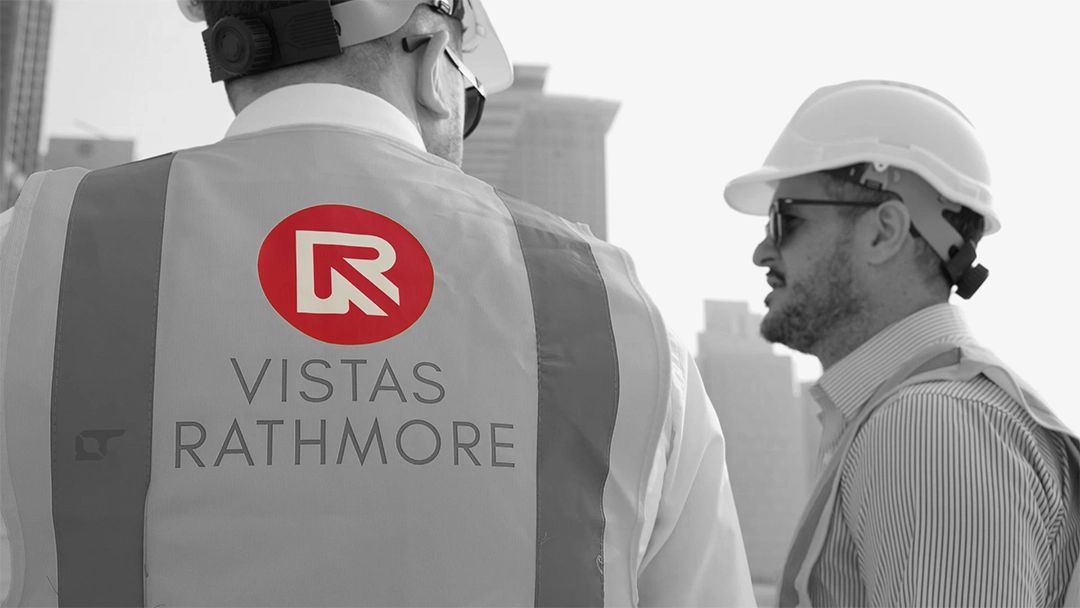
At Vistas Rathmore, that is the model we work to. Seasoned professionals, equipped with the right tools, focused on outcomes. AI handling the analytical heavy lifting so our people can concentrate on what actually determines whether a project lands: the decisions, the relationships, and the judgement calls that no software will ever make for you.
The hard hat stays on the person. That is the whole point.